How to Match Heritage Bricks Properly
"Your home already knows what it needs. The trick is learning how to read the clues."
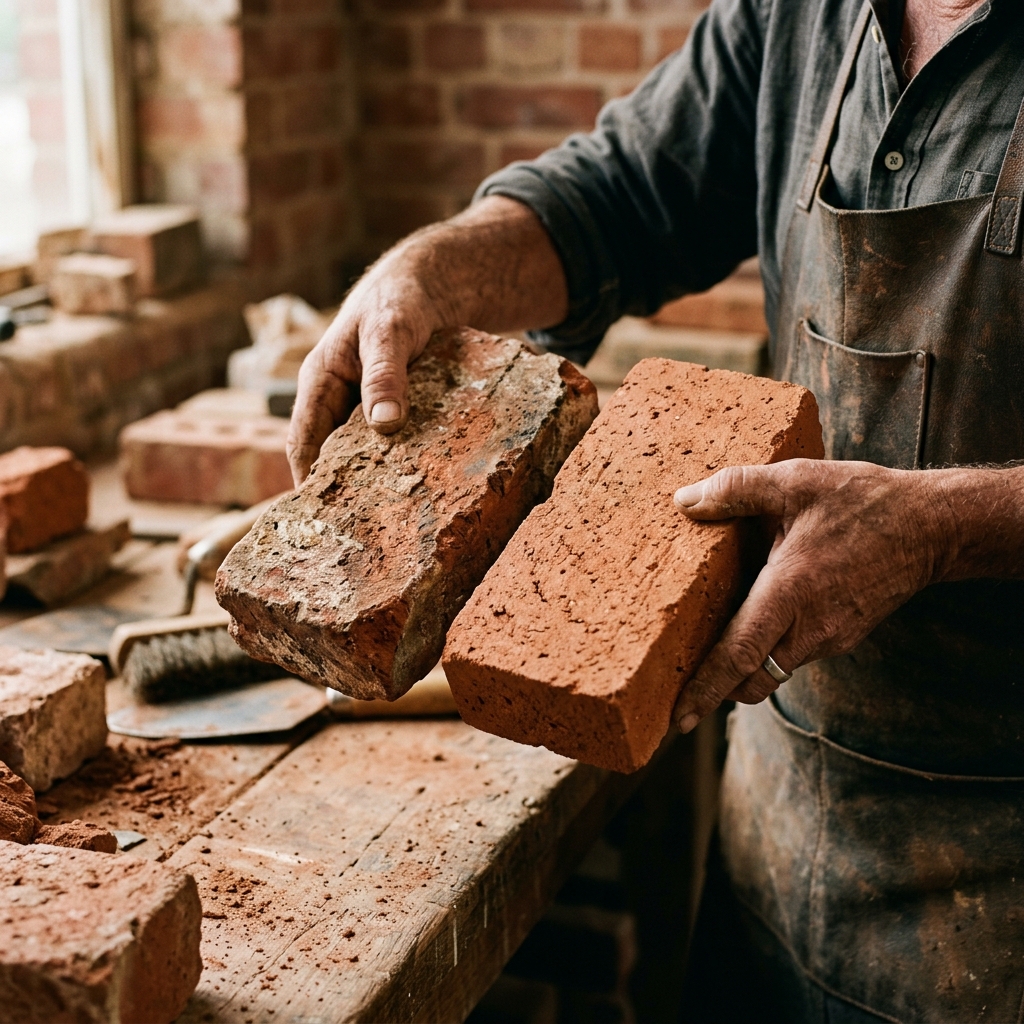
Why It Matters
A successful brick match should be invisible. When you look at an extension or a patched repair on a period property, your eye shouldn't be drawn to where the old building ends and the new one begins.
Using modern metric bricks on a pre-1965 property is one of the most common, and visually jarring, mistakes we see. Not only do the colours and textures clash, but the dimensions are fundamentally different, completely ruining the original coursing lines.
Beyond aesthetics, matching the correct density and permeability of your existing bricks is crucial for the long-term structural health of your home. A dense modern brick placed next to a soft, handmade Victorian brick will cause the older brick to weather at an accelerated rate.
The Master Craftsman's Breakdown
Matching bricks isn't just about holding a colour chart up to a wall. It requires an understanding of regional clay types, historical manufacturing methods, and how decades of weathering alter a brick's appearance.
Here is the methodology we use when assessing a property in St Albans or the wider Hertfordshire area:
- Dimension Assessment: We measure the height, length, and depth. Pre-1965 imperial bricks are typically 3 inches high, whereas modern metric bricks are 65mm. This difference dictates everything.
- Texture and Face: Is the face smooth, creased, wire-cut, or tumbled? Handmade bricks have distinct folds from the mould, while later machine-made bricks are sharper.
- Clay Colour and Body: We look past surface soot to the true clay colour. Is it a London Yellow Stock, a deep red rubbed brick, or a multi-tonal mix?
- Weathering Profile: New handmade bricks often need to be lightly distressed or tinted to match 150 years of natural London/Hertfordshire weathering.
Common Mistakes to Avoid
We frequently get called in to fix mistakes made by general builders who lack heritage expertise. Avoid these common pitfalls:
- Using metric bricks and making the mortar joints thicker to try and match imperial coursing (it looks terrible).
- Buying "reclaimed style" modern bricks that have the right colour but the wrong permeability.
- Matching the brick to a dirty wall, only to find it clashes completely if the building is ever cleaned.
- Forgetting to match the mortar. A perfect brick match is useless if the pointing colour and profile are wrong.
Professional Recommendations
Always request a sample panel before committing to a brick for a large extension. Lay up a square metre of the proposed brick using the exact lime mortar mix specified for the job, and let it dry. Mortar completely changes the perceived colour of the brickwork.
For Listed Buildings and properties in Conservation Areas, always consult with your local conservation officer before purchasing materials. We regularly liaise with Hertfordshire planning departments to get material approvals signed off seamlessly.
Frequently Asked Questions
Need professional advice?
Whether you need brick matching, lime pointing, or advice on a listed building project, our heritage specialists are ready to help.
Contact an Expert