Lime Mortar vs Cement: Protecting Old Buildings
"Old buildings need to breathe. Modern cement often stops them."
Why It Matters
If your home was built before the 1930s, it was constructed using lime mortar. This isn't just a historical footnote; it is a fundamental part of how the building manages moisture.
Traditional solid walls don't have modern cavity gaps or damp-proof courses. They rely on "breathability", absorbing rain and then allowing it to evaporate harmlessly back out. Lime mortar is soft and porous, acting as the lungs of the wall.
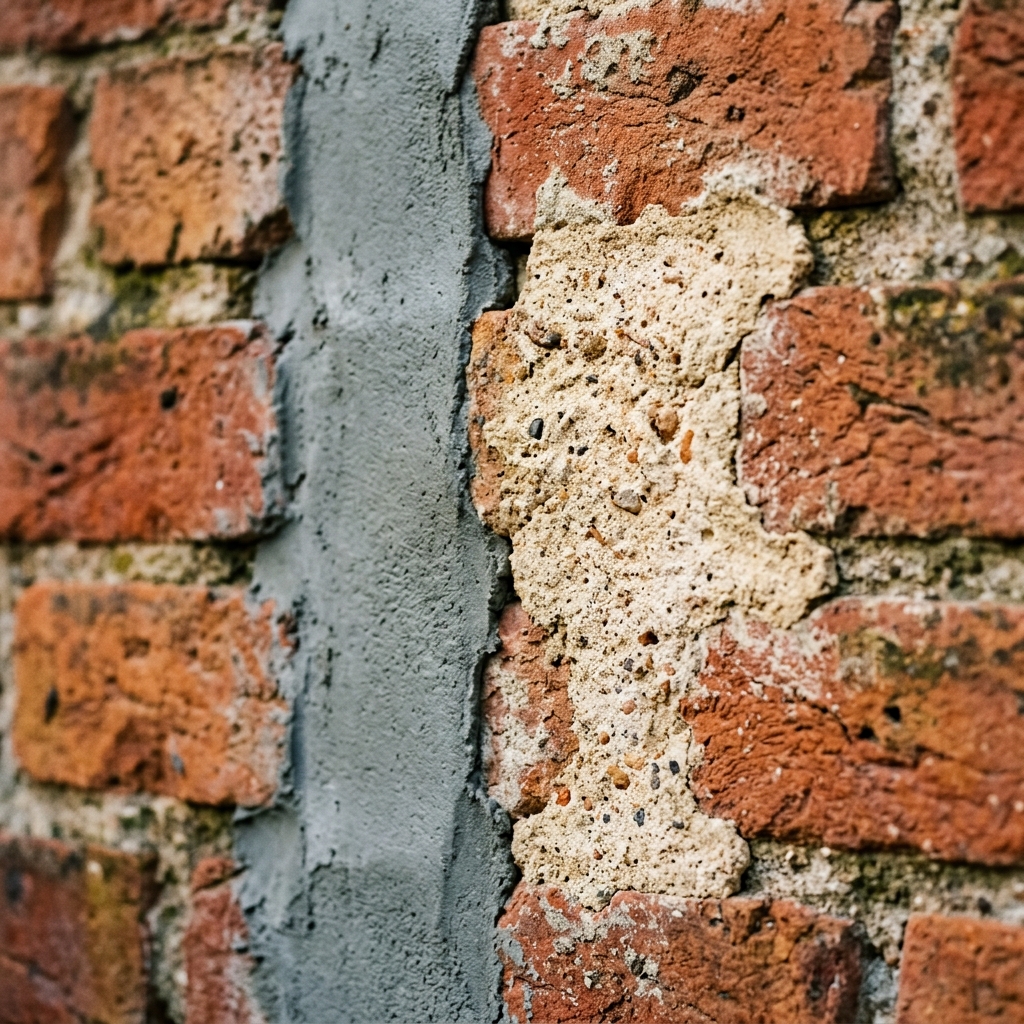
When modern, hard, impermeable cement is used to repoint these walls, moisture becomes trapped. When winter arrives, that trapped water freezes, expands, and literally blows the face off the historic bricks (a process known as spalling). Once the fired face of a brick is gone, the soft interior crumbles rapidly.
Understanding the Chemistry
Lime mortar is made from lime putty (or natural hydraulic lime), sharp sand, and water. As it cures, it absorbs carbon dioxide from the air, returning to its original limestone state over many months.
Here is why it outperforms cement on heritage homes:
- Permeability: It allows water vapour to pass through it, ensuring walls dry out quickly.
- Flexibility: Old buildings move slightly on their shallow foundations. Lime accommodates this micro-movement; rigid cement just cracks.
- Sacrificial Nature: Mortar is meant to weather away faster than the brick. It is easier to repoint a wall every 60 years than it is to replace shattered bricks.
- Aesthetics: The soft, textured finish of lime, embedded with local aggregates, simply looks correct against historic masonry.
Common Mistakes to Avoid
The damage caused by well-meaning but uneducated builders using cement on Victorian homes is an epidemic.
- Using a "weak cement" mix. Even a small amount of Portland cement destroys the breathability of the mortar.
- Smearing cement over the face of the brick (strap pointing), which traps even more moisture.
- Failing to remove the old cement deeply enough before applying new lime mortar. We always rake out to a minimum depth of twice the joint width.
Professional Recommendations
Never let a contractor near your period property with a bag of Portland cement. Ask explicitly what type of lime they intend to use (NHL 2, NHL 3.5, or Lime Putty) and why.
If you currently have cement pointing that is damaging your bricks, have it carefully removed by specialists using hand tools or oscillating arbour tools. Angle grinders in the wrong hands will destroy the edges of your bricks forever.
Frequently Asked Questions
Need professional advice?
Whether you need brick matching, lime pointing, or advice on a listed building project, our heritage specialists are ready to help.
Contact an Expert