The Art of Repointing Heritage Brickwork
"Good pointing should disappear into the building. Bad pointing screams from the pavement."
Why It Matters
Repointing isn't just structural maintenance; it completely defines the visual character of your home. The mortar joints make up roughly 15-20% of the surface area of a brick wall.
A sloppy pointing job with the wrong profile or a glaringly bright mortar colour can instantly ruin the aesthetic appeal of a beautiful Victorian terrace or a grand Georgian home.
Proper repointing restores the weather-tightness of the wall while preserving its historic integrity and ensuring the bricks themselves remain the star of the show.
The Repointing Process
A true heritage repointing project is slow, meticulous work. It cannot be rushed.
- Preparation (Raking Out): The old, failing mortar must be removed to a depth of at least 2 to 2.5 times the width of the joint. We use hand tools and specialized dust-extracted grinders to avoid nicking the arrises (edges) of the bricks.
- Flushing & Damping: The open joints are thoroughly flushed with water to remove dust and control the suction rate. If the bricks pull moisture from the new lime mortar too quickly, the mortar will fail.
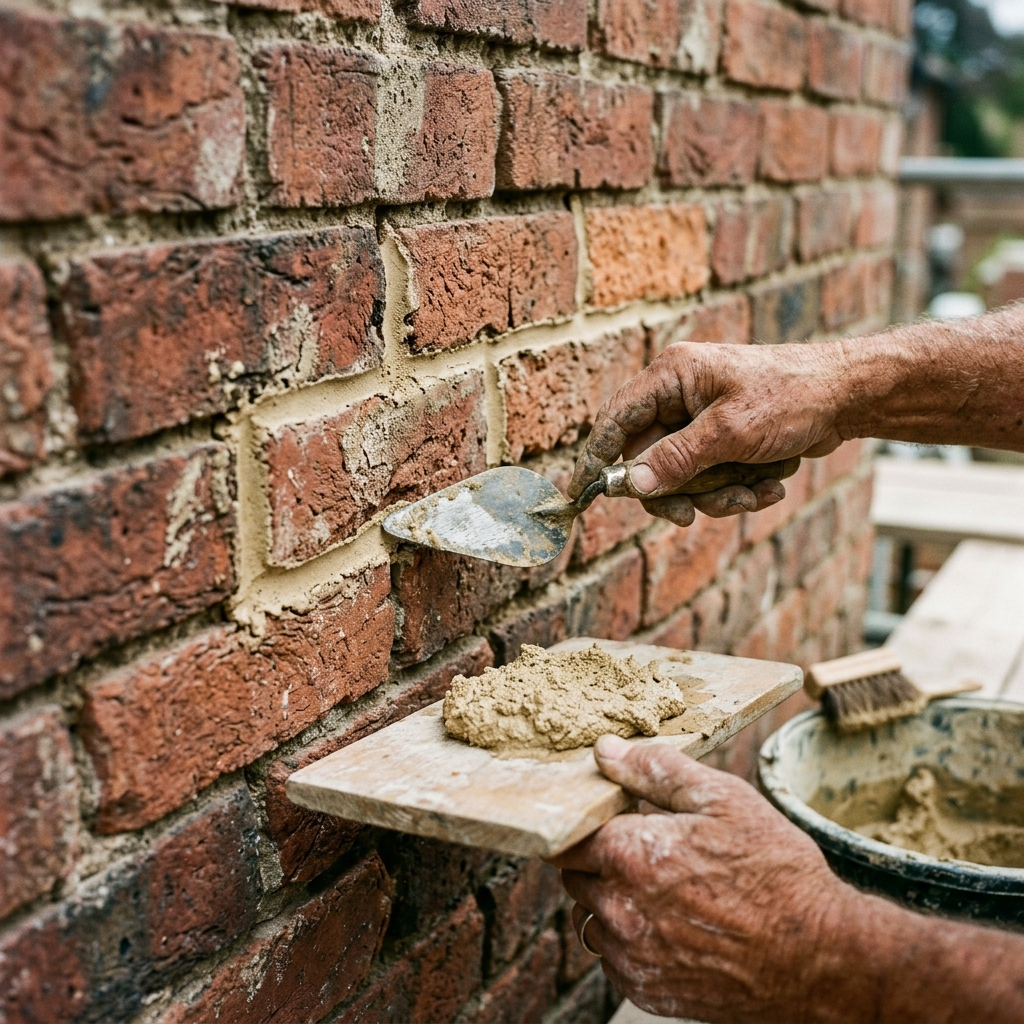
- Application: The lime mortar is pushed firmly into the back of the joint using specialist pointing trowels, ensuring there are no voids.
- Finishing: Depending on the era of the building, the joint is struck to a specific profile, usually flush, slightly recessed, or weather-struck.
Common Mistakes to Avoid
The most frequent errors usually come from builders trying to speed up a process that inherently requires patience.
- Using angle grinders recklessly, which widens the joints and creates irreversible "tramlines" across the bricks.
- Applying mortar too wet, which smears across the brick faces and leaves a messy haze.
- Using a modern "weather-struck" profile on a soft Victorian brick, creating hard shadows that look entirely out of place.
- Failing to protect the new mortar from strong sun, wind, or frost while it cures.
Professional Recommendations
For most Victorian and Edwardian properties in Hertfordshire, we recommend a flush joint that is lightly beaten back with a stiff churn brush once the mortar has gone "green" (partially set). This exposes the aggregate in the sand, giving a beautiful, textured, traditional finish that blends seamlessly.
Ensure your contractor includes comprehensive dust management and site protection in their quotation. Raking out old mortar is an incredibly dusty process.
Frequently Asked Questions
Need professional advice?
Whether you need brick matching, lime pointing, or advice on a listed building project, our heritage specialists are ready to help.
Contact an Expert